For subscription box brands and direct-to-consumer retailers, the box is part of the product. Customers film unboxings, share them on social media, and return partly because of the tactile experience of opening something that feels considered. A flimsy, generic brown box signals the opposite of what premium subscription brands want to say.
The challenge for scaling brands is that domestic box suppliers - particularly in the US and UK - become expensive and slow at volume. Custom print runs from local vendors carry high setup fees. Lead times are long. Minimum order quantities are negotiated one-off rather than structured.
This is why DTC and subscription brands at the 10,000-plus-box-per-month level are increasingly sourcing mailer boxes directly from India.
What Makes a Good Mailer Box
Before evaluating suppliers, it helps to be precise about what a mailer box actually is and what it needs to do.
A mailer box (also called a rigid mailer, self-locking shipper, or crash-lock box depending on the closure mechanism) is a corrugated or paperboard box designed to be opened and closed without adhesive tape. The classic format is a lid-and-base construction where the two halves meet with a firm snap. The interior is clean and flat, creating the reveal moment that makes unboxing satisfying.
For subscription brands, the key specification parameters are:
Board type: E-flute corrugated (1.5mm) is the most common for mailer boxes. It is thinner than standard shipping corrugated, which means it takes print exceptionally well while still providing structure. B-flute (3.5mm) is used for heavier products where more cushioning is needed. Paperboard (non-corrugated) is an option for lightweight items at very high volumes. The structural trade-offs between E-flute, B-flute, and other profiles are covered in our B, C, and E flute comparison guide, which explains how each affects cushioning, print quality, and compression strength.
Print specification: E-flute takes 4-colour process (CMYK) printing cleanly, allowing photographic imagery and complex brand designs. Litho-laminated construction - where a full-colour printed sheet is laminated onto the corrugated board - is the premium option for brands requiring the sharpest colour accuracy and widest design freedom. Standard flexo print on E-flute is adequate for 1 to 4 colour designs and significantly cheaper.
Interior finish: White interior liner is standard for brands where the unboxing reveal matters. Kraft interior is cheaper and used when the box will contain inner packaging (tissue paper, pouches) that creates the visual.
Size tolerance: Mailer boxes must close firmly without being too tight or too loose. Internal dimensions must be specified to within 1mm tolerance and prototyped with your actual product before production runs.
Closure type: The two main options are tuck-end (the top flap tucks into the front panel) and magnetic closure. Magnetic closures use embedded magnets in the lid and base - they are more premium, more expensive, and require a longer lead time. Tuck-end is adequate for most subscription box applications.
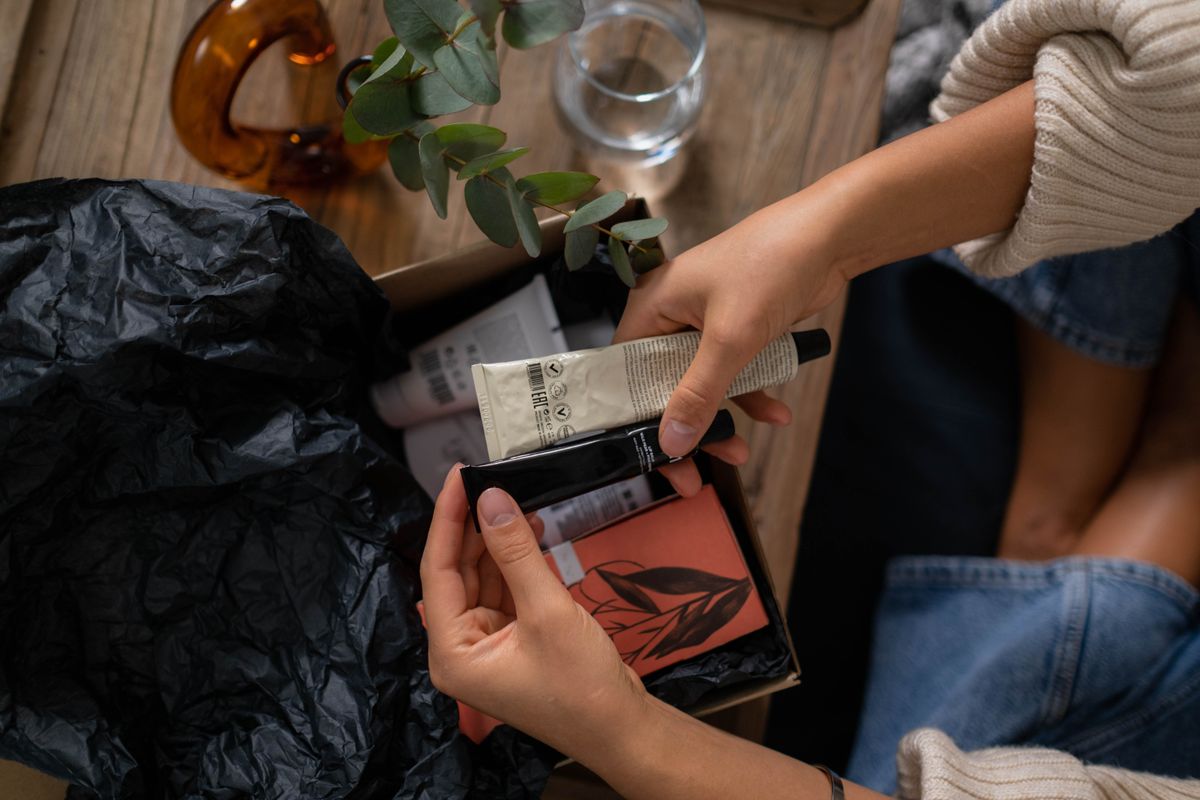 E-flute corrugated mailer boxes with CMYK print give subscription brands control over brand presentation at scale.
Why India for Mailer Boxes
Indian corrugated manufacturers have invested in exactly the equipment that subscription box brands need: die-cutting machines capable of complex closure mechanisms, flexo and litho printing lines, and the production flexibility to run both large batches and smaller top-up orders.
Three advantages stand out for subscription brands specifically:
Print economics at scale. The setup cost for a custom die-cut mailer box - tooling the die, preparing plates - is a one-time investment amortised across the production run. At 10,000-plus units, the per-unit economics of an Indian direct order become compelling relative to domestic suppliers. At 50,000-plus units per quarter, the savings are significant.
Customisation without premium. Domestic box suppliers often treat custom sizes or closure modifications as exceptions requiring additional tooling fees and extended timelines. Indian manufacturers with in-house die-cutting treat custom dimensions as standard. If your product is an unusual size, an Indian factory will tool a die to match it - typically within the standard lead time.
Eco credentials. Many subscription brands carry sustainability commitments to their customers. FSC-certified corrugated board, water-based inks, and recyclable materials are all standard options from quality Indian manufacturers. For brands that communicate their packaging choices to subscribers, the ability to state FSC certification on the box itself is a meaningful credential. Brands considering a returnability element alongside their outbound mailer programme may also find value in our guide on returnable and reusable packaging for e-commerce, which covers multi-trip specifications and reclosable closure options. Candle and home fragrance brands, where glass primary packaging requires internal cell partitions for unit protection during transit, will find corrugated specifications specific to their category in our guide on corrugated boxes for candle and home fragrance brands. Tea and coffee subscription brands sourcing corrugated secondary cases for retail or wholesale operations will find specific flute grades, certification requirements, and India sourcing guidance in our corrugated boxes for tea and coffee brands guide.
Specifications to Get Right
Internal dimensions first. Always specify internal dimensions (the space inside the closed box), not external. The board thickness adds to external dimensions. For a mailer box in E-flute (1.5mm), add approximately 3mm to each dimension to get the external measurement. Get this wrong and the box either won't close or will rattle.
Prototype before the production run. Request a physical prototype before committing to a full run. A good manufacturer will produce a sample from your die-line within 5-10 working days. Assemble it with your actual product and evaluate the closure, fit, and print before approving production.
Colour matching. For CMYK litho-laminated boxes, provide print-ready artwork at 300 DPI with colour profiles specified. For Pantone-matched flexo print, provide Pantone Solid Coated references. Request a press proof before the run begins - this is standard practice and should not cost extra on any significant order.
Ink type. Water-based inks are standard and fully recyclable. Specify UV-cured inks only if you need a high-gloss finish - they are less recyclable and more expensive. Avoid solvent-based inks entirely for a brand with sustainability positioning.
Lead Times and Inventory Planning
A mailer box programme from India typically works on this cycle:
- Die-line and artwork approval: 3-5 working days
- Physical sample production and shipping: 8-12 working days
- Sample approval: your internal review time
- Production of full run: 20-28 working days (litho-laminated takes longer than flexo)
- Sea freight to US East Coast: 22-28 days from Mundra Port
- Sea freight to UK ports (Felixstowe): 18-22 days
For quarterly subscription box programmes, order 12-14 weeks ahead of your dispatch date. For monthly programmes, you will need a rolling inventory of at least two production runs in stock.
The key discipline is decoupling your artwork/design calendar from your production calendar. Lock artwork 4 weeks before production begins. Production runs concurrently with your design finalisation for the following cycle.
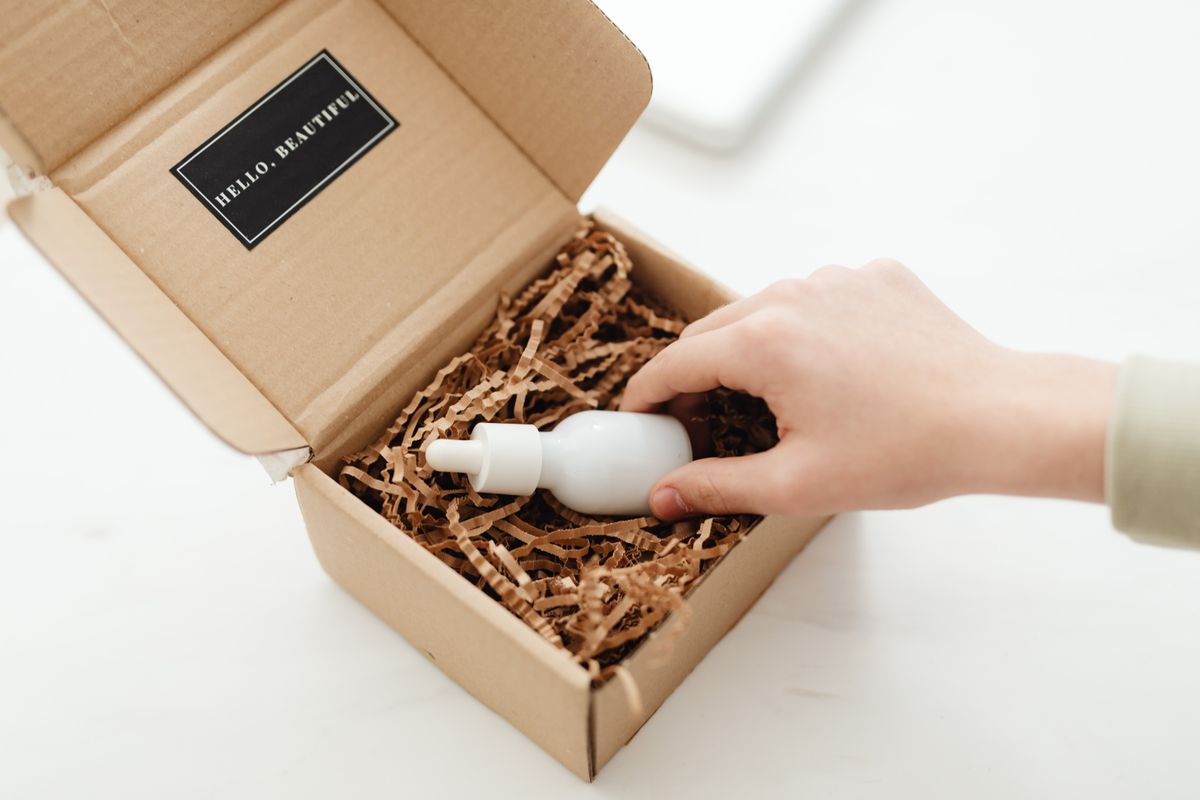 Sea freight from Mundra Port to US East Coast takes 22-28 days. Plan a rolling inventory of 12-14 weeks to keep the subscription programme running without stock-outs.
What to Ask a Supplier
Before selecting an Indian manufacturer for your mailer box programme, ask:
- Do you manufacture E-flute corrugated mailer boxes in-house, or do you outsource the board and print?
- Can you produce litho-laminated boxes, and do you have examples of comparable work?
- What is your colour tolerance standard for CMYK litho print?
- What is the process for approving a die-cut prototype before full production?
- Can you supply FSC-certified board, and is chain-of-custody documentation available?
- What quality control steps happen during the production run, and what documentation comes with the shipment?
A manufacturer who handles both the corrugated board production and the printing in-house has better quality control than one who outsources either step.
Frequently Asked Questions
Which companies in India export custom mailer boxes for subscription brands?
Corrugated mailer box manufacturers in Gujarat (Rajkot, Ahmedabad, Surat) and Maharashtra (Mumbai, Pune) are the main export clusters. The key distinction is factory-direct versus trading company: a factory-direct manufacturer controls board production and print in-house, which gives buyers direct access to quality documentation and faster resolution of any specification issues. Request verified export references from US or UK buyers before committing to a supplier.
What is the minimum order quantity for custom mailer boxes from India?
Most established Indian manufacturers work to an MOQ of 5,000 units per size and print configuration for E-flute custom mailer boxes. At this volume, a single production run covers die setup, plate making, and the corrugating pass efficiently. Litho-laminated boxes typically run higher - 5,000 to 10,000 units - due to the additional lamination setup. For subscription brands ordering monthly, the economics favour building a 2 to 3 month buffer stock rather than ordering smaller batches more frequently.
How long does it take to produce custom mailer boxes in India?
Production lead time from approved artwork and die-line to port loading is typically 20 to 30 working days for E-flute flexo-printed mailer boxes, and 25 to 35 working days for litho-laminated boxes. Add 22 to 28 days sea freight to US East Coast ports, or 18 to 22 days to UK ports. A first order including die-line approval and physical prototype should budget 10 to 14 weeks total from initial specification to warehouse receipt.
What print methods are available for subscription mailer boxes from India?
The two main options are flexographic print directly onto E-flute corrugated (suitable for 1 to 4 Pantone colours with solid design areas) and litho-laminate (a full-colour printed sheet laminated onto corrugated board, suitable for CMYK photographic designs). Flexo is more common for straightforward brand designs and is significantly cheaper at equivalent volumes. Litho-laminate produces sharper, richer colour reproduction and is the standard for premium unboxing experiences where photographic imagery is part of the brand.
How do I approve mailer box quality before the production run starts?
Request a physical die-cut prototype (sometimes called a pre-production sample or golden sample) before approving any bulk production run. A genuine Indian manufacturer produces a prototype using your approved die-line and artwork on the specified board. Evaluate the prototype against: structural integrity when assembled and filled with representative product weight, print colour accuracy against your Pantone or CMYK references, surface coating finish, and interior liner colour. Written approval of the prototype is the trigger for the production run - never approve from digital renders alone.
Working with Whizzpack
Whizzpack manufactures custom printed corrugated boxes at our own factory in Rajkot, Gujarat. We produce E-flute and B-flute boxes with flexo print, and can discuss litho-laminated options for brands requiring photographic print quality.
We supply subscription brands and DTC retailers in the US and UK directly - no broker, no intermediary. FSC-certified board is available, and we provide full export documentation including GSM test reports and chain-of-custody certificates. Pet food subscription services are one of the fastest-growing segments of the DTC category, and we cover the board and print specifications specific to that format in our corrugated boxes for pet food brands guide.
To see our custom print capabilities, visit our custom printed corrugated boxes page. For broader context on how Indian corrugated imports work, see our step-by-step import guide.
Whizzpack is a factory-direct packaging manufacturer in Rajkot, India, specialising in corrugated boxes and Cotton Bags for Seeds for B2B export to the US, UK, and worldwide.