Fast food is a volume business. Every pizza, every burger, every pastry and every parcel that leaves your kitchen needs a box. Multiply that across a busy outlet doing 400 to 600 covers a day, or across a franchise network with dozens of locations, and packaging becomes one of the highest-frequency consumable costs in the operation.
Most fast food operators buy boxes through local distributors. Some make do with generic kraft boxes from wholesale suppliers. Very few go directly to the manufacturer. That gap is exactly where fast food chains and growing QSR (quick service restaurant) brands can save significantly on packaging while also getting exactly the spec and print quality they want.
This guide covers why corrugated is the right material for fast food packaging, what the common box types look like across pizza, burgers, hotdogs, pastries, and delivery parcels, and how direct sourcing from an Indian corrugated manufacturer works for food businesses ordering at scale.
Why Corrugated Is the Right Material for Fast Food
There are several packaging materials used in food service: plastic clamshells, foam containers, paper bags, aluminium foil trays, and corrugated board. Each has its place, but corrugated has a combination of properties that make it uniquely suited for a wide range of fast food applications.
Structural integrity under heat and moisture. Food packaging needs to handle thermal stress. A hot pizza, a steam-releasing burger, a pastry fresh from the oven - all of these introduce heat and moisture into the packaging. A well-constructed corrugated box, particularly one made with a food-safe liner, holds its shape under these conditions. The flute layer in the middle of corrugated board acts as a thermal insulator, helping retain heat during delivery.
Stack and transport strength. Fast food outlets stack boxes, transit parcels get stacked in delivery bags, and franchise distribution requires boxes to survive palletised transport. Corrugated board - especially B-flute and E-flute grades commonly used in food packaging - provides resistance to top-load crushing without adding significant weight.
Print surface. This is a major point for franchise operators and chain brands. The outer liner of a corrugated box takes flexographic and digital printing well. Full-colour logos, brand colours, QR codes, social media handles, ingredient disclosures - all of these can be incorporated into the box design. For a brand that wants its packaging to reinforce brand identity at the point of delivery, corrugated offers a large printable surface.
Recyclable and eco-friendly. Corrugated board is one of the most recycled materials in the world. When made with recycled content and unbleached kraft liners, it is fully biodegradable. For food businesses responding to consumer pressure around sustainable packaging, switching from foam or mixed-material clamshells to corrugated is a meaningful change. FSC-certified corrugated is available for brands that want to demonstrate responsible sourcing.
Pizza Boxes
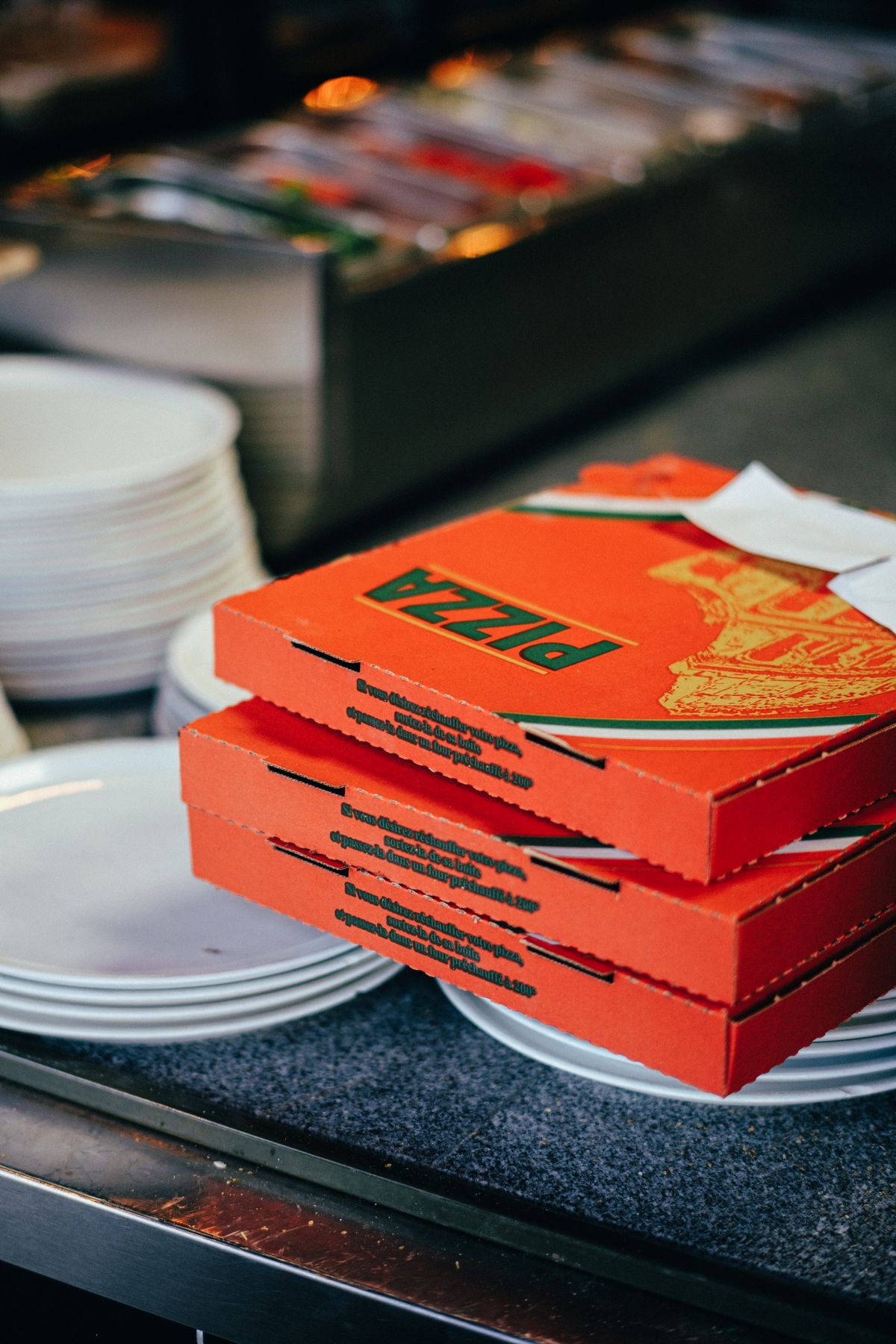
Pizza is the most established use case for corrugated in food service. The standard pizza box format - a square tray with a full top lid and interlocking bottom - is made almost entirely from single-wall corrugated board, typically B-flute (3mm) or E-flute (1.5mm) depending on box size and the rigidity required.
The key specifications for pizza boxes:
- Board grade: Standard pizza boxes use 150 to 175 gsm kraft liner with a recycled fluting medium. Higher-end boxes for artisan pizza brands sometimes use 200 gsm liner for better print contrast.
- Flute type: B-flute for standard round pizza boxes (8-inch to 16-inch). E-flute for thinner, crisper boxes used for gourmet or wood-fired pizza.
- Food-safe liner: The inner face liner should be food-safe and grease-resistant. This is a standard requirement for pizza boxes and should be explicitly specified when ordering.
- Vent holes: Many pizza box designs include die-cut vent holes on the sides or top to release steam without making the base soggy.
- Custom sizes: 8-inch, 10-inch, 12-inch, 14-inch, and 16-inch are the common diameters, but any custom size can be tooled for orders of sufficient volume.
For chains ordering consistent volumes, having your own custom-printed pizza box rather than a plain kraft or generic branded box from a distributor creates a significantly more professional presentation. See our detailed guide on pizza boxes from India for everything on specifications and minimum order quantities.
Burger and Hotdog Boxes
Burger boxes and hotdog cartons require different geometry. The classic burger box is a rectangular or square clamshell form - a single corrugated blank that folds into a base with a lid, holding the burger, wrap, or sandwich securely without compressing it.
Key considerations for burger packaging:
Grease resistance. Burgers generate oil from the patty and sauces. The inner surface of the corrugated board should have a grease-resistant barrier coating, either applied at the liner stage or added as a PE (polyethylene) coating on the food-contact surface. This prevents the box from going limp or creating grease stains on delivery surfaces.
Rigidity vs. weight. A burger box that is too thick adds unnecessary cost and weight. E-flute (1.5mm) or even micro-flute F-flute is appropriate for most burger and hotdog packaging because it provides sufficient rigidity for a single-serve item without the bulk of a full B-flute box.
Locking mechanisms. Burger boxes intended for delivery need to lock securely so they do not open during transport. Tuck-and-lock tabs or auto-bottom constructions keep the contents secure in a delivery bag.
For hotdog cartons, the geometry shifts to a long, narrow tray - either an open tray with wrap, or a fully enclosed carton for fancier presentation. Corrugated E-flute works here too, with inner grease-resistant liner.
Pastry and Bakery Boxes
Pastry packaging has its own set of requirements. Pastries, doughnuts, croissants, cakes, and similar baked goods are fragile and visually important. The packaging needs to protect the product without crushing delicate textures, while also presenting well at point of purchase.
Corrugated board at E-flute or micro-flute weight is appropriate for pastry boxes. The low profile of E-flute keeps the box thin and lightweight while still providing structural protection. For premium bakeries and patisseries, double-cover printing on E-flute with a gloss or matte lamination creates packaging that looks high-end.
Common formats in pastry packaging:
- Window cartons: A corrugated base with a die-cut window covered by a clear PET film insert. Allows the product to be visible without opening the box.
- Drawer-style boxes: A sleeve and tray construction where the inner tray slides out from the outer sleeve - often used for macaron boxes, chocolate assortments, and similar premium items.
- Standard lid-and-tray: The most common format - a tray base with a separate lid. Simple, stackable, and easy to fill on a production line.
For franchise pastry chains and doughnut brands, corrugated boxes printed with the brand identity are a key part of the in-store and delivery experience. For ambient confectionery and snack brands distributing through UK or US grocery retail rather than food service, the brief shifts to shelf-ready secondary packaging; our guide to corrugated boxes for snack food brands covers the shelf-ready display specifications, FSC certification, and wholesale distribution packaging requirements that major grocery retailers expect.
Delivery and Parcel Packaging for Food
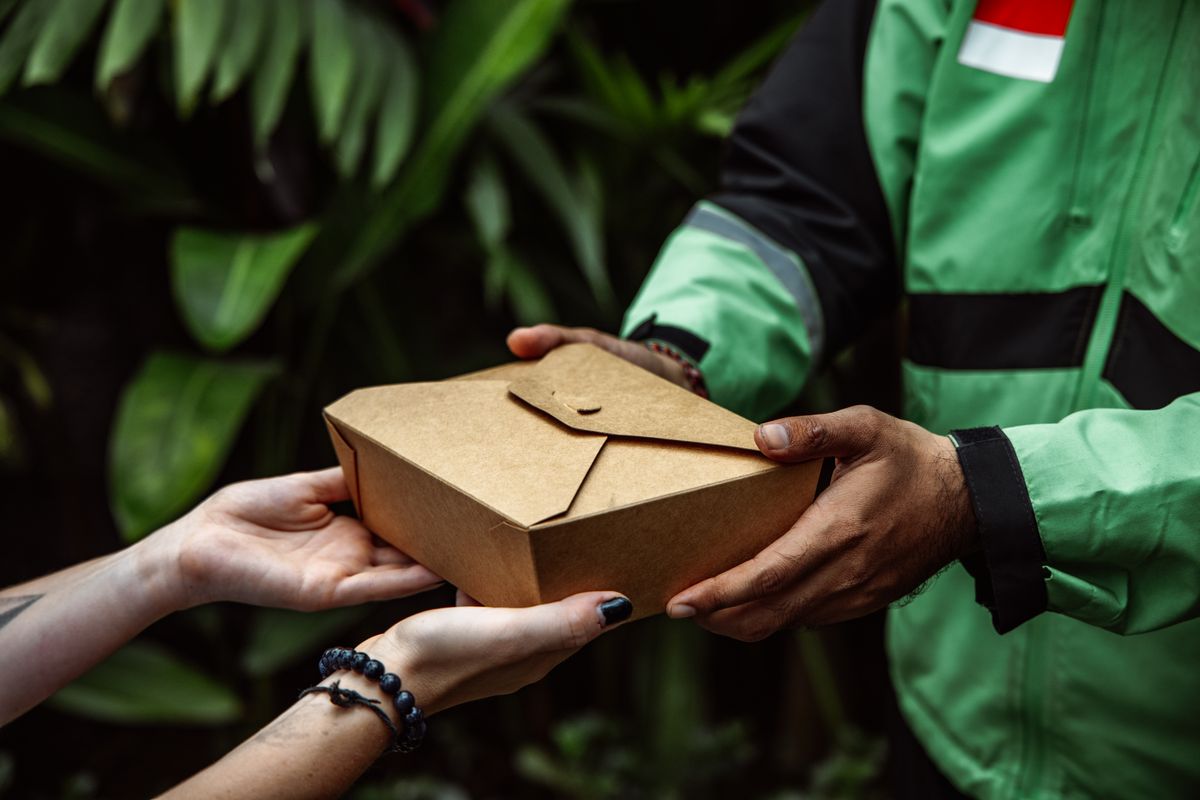
The growth of food delivery apps has created a new packaging requirement for restaurants: the parcel box. When food is going out through a delivery aggregator or a restaurant's own delivery fleet, it often needs to be packed in a way that keeps multiple items together, prevents spillage, and maintains temperature for 20 to 45 minutes in transit.
Corrugated boxes work well here for several reasons:
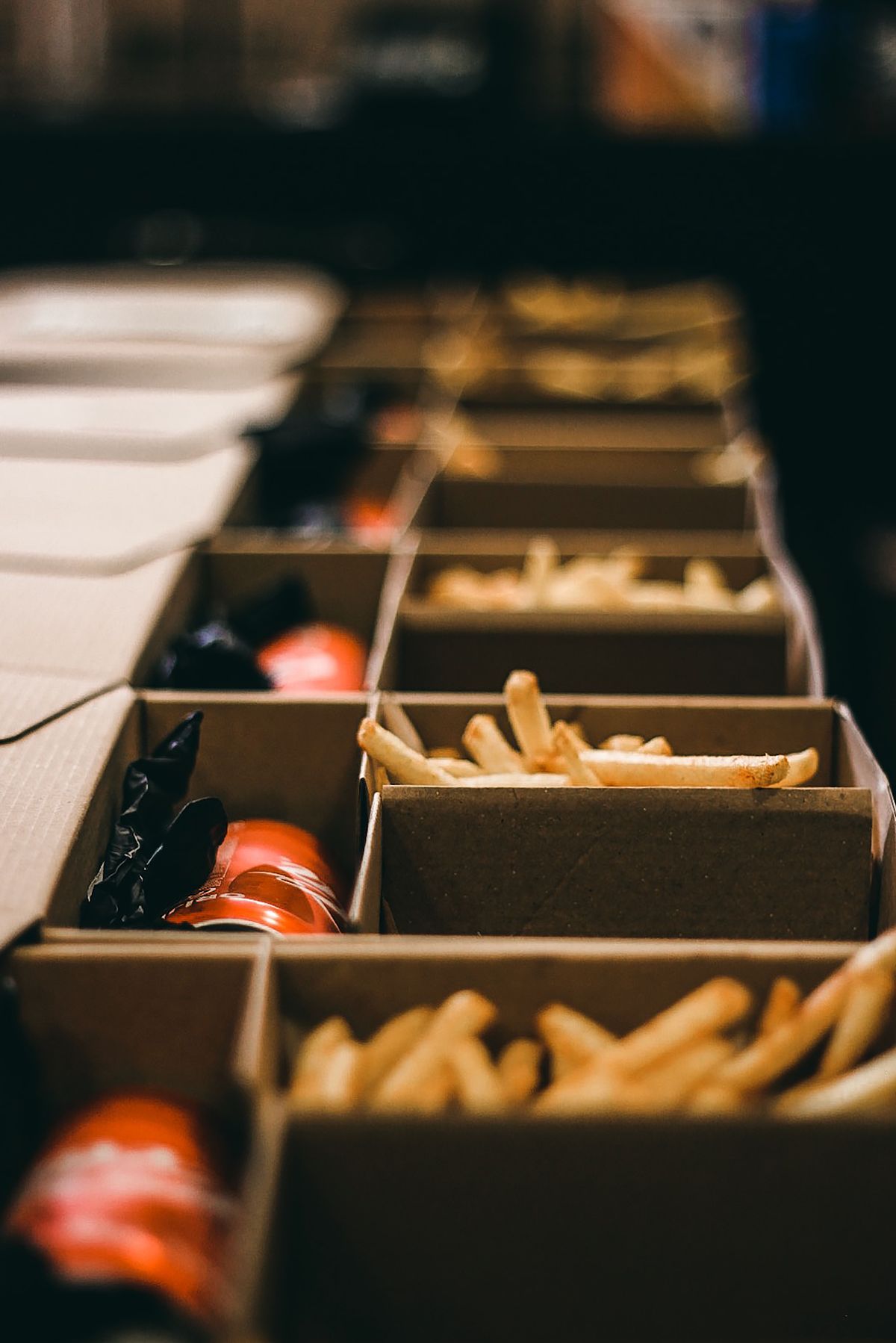
Multiple SKUs in one pack. A single corrugated delivery box can be divided with internal partitions to hold a pizza, a side, and drinks separately. This is more professional than cramming everything into a paper bag.
Temperature retention. The insulating effect of the corrugated flute layer slows heat loss compared to a plain paper bag. For restaurants making the case that food arrives hot, this is a meaningful differentiator.
Brand surface. A corrugated delivery box gives the brand a large panel to print on - logos, thank-you messages, social handles, reorder QR codes. This is a touchpoint that a paper bag or plastic clamshell cannot provide in the same way.
For food businesses scaling up their delivery operations, investing in a standard delivery box specification - one that holds your most common order combinations - and ordering it in bulk is one of the more impactful packaging decisions you can make.
Eco-Friendly Credentials for Food Packaging
Consumer expectations around sustainability have increased significantly across the food service industry. Franchise operators and food chains are regularly asked by customers, investors, and journalists about their packaging practices. Corrugated board is well-positioned here.
Recyclability. Corrugated is accepted by almost every municipal recycling programme. Unlike mixed-material packaging (plastic-lined paper cups, foil trays with paper lids), corrugated is a single-material product that can be recycled without separation.
Recycled content. Most corrugated box manufacturers use recycled fibre in the fluting medium and often in the liner too. A food-safe box can be made with 70 to 100% recycled content depending on specification.
FSC certification. The Forest Stewardship Council (FSC) certification on corrugated board means that any virgin fibre used in the product comes from responsibly managed forests. For brands making eco-friendly claims, FSC certification provides third-party backing.
Biodegradability. Uncoated or water-based coated corrugated board breaks down fully in composting conditions. This is in contrast to PE-coated or wax-coated boxes which cannot be composted.
For fast food operators looking to reduce plastic use - moving away from styrofoam, plastic clamshells, and mixed-material packaging - corrugated board is typically the cleanest available alternative across most food categories.
You can read more about our approach to eco-friendly packaging sourcing from India.
Custom Printing for Franchise Brands
Brand consistency is one of the foundational requirements of any franchise operation. Every location in a chain should deliver an identical customer experience, and packaging is part of that. A pizza box or burger box with a well-executed custom print does several things:
- Reinforces brand recognition at the point of delivery
- Communicates quality and professionalism to the customer
- Provides a marketing surface at no incremental cost per impression
- Differentiates the brand from generic white-box competitors
Corrugated manufacturers in India typically offer flexographic printing (1 to 6 colour) as standard, with digital printing available for shorter runs or more complex artwork. Flexographic printing on corrugated is extremely cost-effective at volume, which is why virtually every major food chain in North America and Europe uses printed corrugated for their primary packaging.
The practical requirements for custom printing:
Artwork files. Vector artwork (AI, EPS, or PDF) is required. Artwork should be set up in the correct number of spot colours for the chosen print method.
Colour matching. Pantone references are the standard for corrugated flexographic printing. Exact colour matching to brand guidelines is achievable within standard print tolerances.
One-time tooling cost. Custom die-cut boxes require a die to be made. This is a one-time cost, and the die is held by the factory for repeat orders.
MOQ for custom print. Custom-printed corrugated boxes are available from a single container load (approximately 5,000 to 20,000 units depending on box size). For franchise networks, this is typically well within a single month's consumption at scale.
Ordering at Scale for Chains and Franchise Networks
The economics of direct import from a corrugated manufacturer work best when volumes are consistent and predictable. For fast food chains and franchise operators, this is usually the case.
A franchise network with 10 to 15 locations running a standard pizza box specification, for example, will consume a large number of boxes per month. Buying through a distributor means paying a distributor margin on every single box. Buying direct from the manufacturer eliminates that margin layer, with the trade-off of managing an import process and carrying some inventory.
What the ordering process looks like:
- Agree specification (dimensions, flute type, board grade, print colours, any special coatings)
- Receive and approve a physical sample - this is a critical step for food packaging where food-safety compliance needs to be confirmed
- Place the production order (typically 4 to 6 weeks production time for a full container)
- Arrange freight (sea freight from Indian ports to US, UK, or Australian ports is the standard route)
- Clear customs and receive stock into your warehouse or distribution centre
- Replenish with a rolling order cycle to maintain stock cover
For growing chains and multi-location franchise operators, this is a standard procurement process. The investment in setup - approving samples, sourcing a freight forwarder, setting up customs documentation - pays off from the first container. UK-based restaurant chains and franchise operators can find detail on customs clearance, EPR compliance, and port logistics specific to UK imports in our corrugated boxes UK import guide.
We supply corrugated boxes to food service operators, distributors, and franchise networks in the US, UK, Australia, and the Middle East. Our production is based in Rajkot, Gujarat, with access to one of India's largest concentrations of corrugated manufacturing capacity.
What to Specify When Enquiring
When you reach out about food service corrugated boxes, having the following details ready will speed up the sampling and quoting process:
- Box type: Pizza box, burger box, pastry box, delivery parcel - describe the end use
- Dimensions: Internal length x width x depth in mm or inches
- Quantity: Monthly or per-order volume across all SKUs
- Board grade: If known - otherwise describe the end use and we will recommend the appropriate specification
- Print requirement: Number of colours, whether you have brand guidelines or artwork ready
- Food contact requirement: Whether the inner surface requires a grease-resistant or food-safe liner
- Delivery destination: Country and port of discharge
If you are not sure about any of these, our team can work through the specification with you based on a sample of your existing packaging or a description of the product being packed.
Getting Started
The first step is a sample. We produce physical samples to your dimensions and specification so you can evaluate the box before placing a production order. For food packaging, this step is non-negotiable - you need to test the box with your actual product before committing to a container.
To request samples or discuss your fast food packaging requirements, contact us via our enquiry form or reach out directly. We respond to all food service enquiries within 24 hours.