Home goods and housewares represent one of the highest-volume categories for UK and US brands importing from India. Ceramics, stoneware, cookware, soft furnishings, bamboo accessories, candles, and small kitchen appliances all move through Indian factories in significant quantities. And all of them have different packaging requirements - what protects a set of ceramic bowls from a 28-day sea freight voyage is not the same as what protects a folded cotton throw.
Getting the corrugated specification wrong for home goods has outsized consequences. A 5 kg stoneware bowl set packed in under-specced single wall will arrive as gravel. A lightweight cotton cushion cover packed in heavy double wall costs more to ship than the product is worth. The corrugated box must be matched to the specific product category.
This guide covers board grades, ECT ratings, and flute choices for the main home goods categories, with guidance on fragile goods protection, Amazon FBA compliance, and how to work with an Indian manufacturer to get the specification right.
 Ceramics, stoneware, and kitchenware represent a significant portion of home goods imports from India to the UK and US.
Why Home Goods Packaging Is More Complex Than Standard Export
Most corrugated box specifications start with one question: what is the weight of the goods? For home goods, weight is necessary but not sufficient. You also need to consider:
Fragility. A ceramic mug and a steel cooking pot may weigh the same, but the ceramic cannot flex or absorb impact. Board grade alone is not enough - you also need to specify inner cell dividers or foam inserts, and the box must be strong enough to protect the product even if a corner is impacted.
Stacking load. Home goods often ship in retail cases - 6 mugs, 12 bowls, 24 small candles. The total carton weight can be significantly higher than the individual product weight suggests. A case of 12 ceramic bowls at 400g each is a 4.8 kg carton, which still needs adequate ECT for stacking in a sea freight container.
Nested goods. Bowls, plates, and saucepans often nest inside each other. The corrugated box must be sized accurately so the nested items do not shift in transit. Custom inner dimensions are standard in India with no price premium at volumes above 2,000 units.
Moisture sensitivity. Soft furnishings - cotton throws, cushion covers, fabric placemats - absorb moisture in sea freight containers. The corrugated specification should include a moisture-resistant liner option for these categories, or goods should be polybag-wrapped before boxing.
Board Grades by Home Goods Category
Indian corrugated manufacturers quote board grades as GSM combinations - the weight in grams per square metre of each paper layer (outer liner, corrugated medium, inner liner). Here is how to match board grade to home goods category:
Lightweight soft furnishings (throws, cushion covers, fabric accessories): 120/90/120 GSM (330 total), 3-ply single wall, C-flute. For goods under 3 kg per carton going to retail customers, this is adequate. Ensure goods are polybag-wrapped inside the carton before sealing.
Candles, home fragrance, reed diffusers: 150/120/150 GSM (420 total), 3-ply single wall, B-flute. B-flute gives a better print surface for branded retail packaging and handles flat crush well for relatively light goods. For a deeper breakdown of B-flute and C-flute characteristics, see our B, C, and E flute comparison guide.
Mugs, cups, small ceramic items: 150/120/150 GSM (420 total), 3-ply C-flute, with individual cell dividers. The board grade alone is not the main protection factor - the internal divider keeps each piece from contacting its neighbours. Specify corrugated cell dividers (not chipboard) for export distances.
Ceramic bowls, plates, and stoneware sets: 180/150/180 GSM (510 total), 3-ply C-flute, with cell dividers and layer pads between rows. For retail cases containing 6 to 12 pieces, the total carton weight will typically be 3 to 8 kg. ECT 40 at this grade handles stacking loads for standard sea freight palletisation.
Cookware (cast iron, stoneware, heavy ceramic): 200/180/200 GSM (580 total) or 5-ply double wall 150/120/150/120/150 (690 total). Cast iron cookware is dense and heavy - a single Dutch oven can be 4 to 6 kg, making a case of two items 8 to 12 kg before packaging. Double wall with ECT 48 is the appropriate specification.
Small appliances (blenders, kettles, toasters): 180/150/180 GSM (510 total), 3-ply C-flute, with custom foam inner packaging. Electronics-adjacent goods need both corrugated strength and internal cushioning. The corrugated provides stack resistance; the foam provides vibration and impact absorption.
For a full explanation of how GSM grades correspond to ECT and Mullen Burst ratings, see our ECT rating vs Mullen Burst guide for UK and US buyers.
Fragile Goods: What the Corrugated Must Do
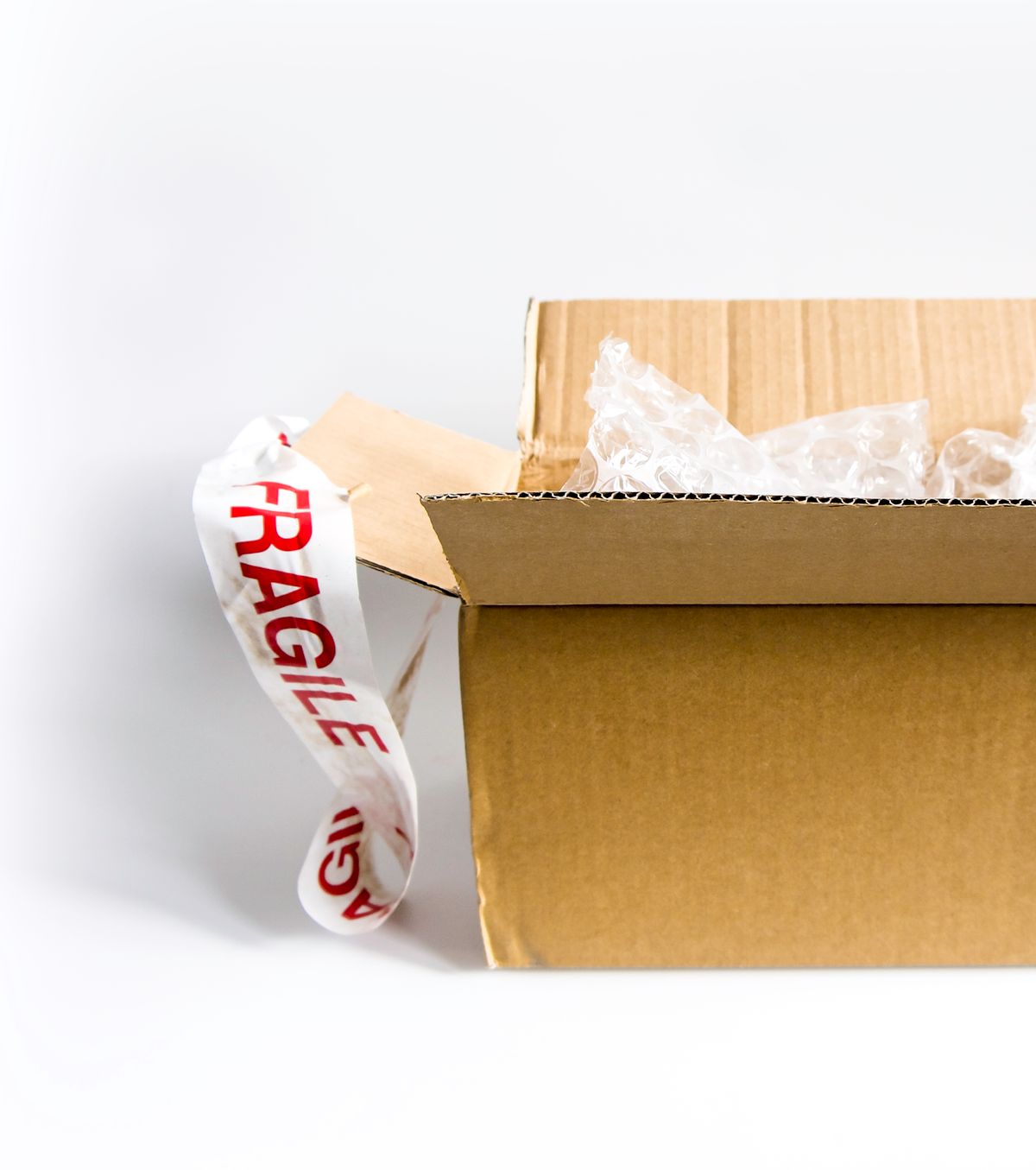 Fragile labelling is not a substitute for correct board grade and internal packaging. The corrugated box must protect the goods if the label is ignored.
A FRAGILE sticker on the outer carton does not guarantee careful handling. For ceramic and glass goods, the corrugated specification must be conservative enough to protect the product even in rough handling scenarios. This means:
ECT over burst strength. In sea freight, vertical stacking load is the primary risk. Specify ECT 32 as a floor for all fragile home goods. For heavy stoneware in tall retail cases, ECT 44 is more appropriate.
Box compression test (BCT). For fragile goods, it is worth requesting a Box Compression Test certificate as well as an ECT certificate. BCT measures the actual load-bearing capacity of the assembled box, which is influenced by both board grade and box geometry. A tall, narrow box has lower BCT than a shorter, wider one at the same board grade.
Cell dividers. Corrugated cell dividers for mugs, glasses, and small ceramics are standard in Indian corrugated manufacturing. They are cut from the same board as the outer box and slot together without glue. Each cell isolates one piece completely, preventing contact damage even in rough transit. Request dividers from 150 GSM corrugated board for rigidity.
Layer pads. For plates and flat stoneware packed in layers, specify double-wall layer pads (cut sheets of corrugated board) between each layer. Single-layer pads are adequate for light goods; double-layer pads are worth specifying for anything over 500g per piece.
Void fill. After all inner packaging is in place, there should be no movement inside the closed box. The test: the assembled, sealed carton should not make a sound when shaken. If there is any movement, add paper void fill or additional corrugated packing material.
Amazon FBA Requirements for Home Goods
US and UK importers selling home goods on Amazon FBA need to meet Amazon's vendor compliance requirements for inbound packaging. The key requirements for corrugated packaging:
Minimum board strength: Amazon US requires a minimum of 200 PSI (Mullen Burst) for FBA inbound cartons. This corresponds approximately to ECT 32 with 150/120/150 GSM board. For heavier cases, ECT 44 is the practical minimum to meet both Amazon's requirement and the actual stacking loads in Amazon fulfilment centres.
Maximum carton weight: 23 kg (50 lb) per inbound carton for standard FBA. For home goods, this is rarely the limiting factor, but heavy cookware cases should be checked.
No excess void fill: Amazon does not want excessive internal packaging that creates waste at their fulfilment centres. Cell dividers are preferred over loose polystyrene or peanut fill.
Case quantity: FBA inbound cases should contain consistent quantities of the same ASIN. Specify box sizes that accommodate your exact retail unit count without forcing units into unusual arrangements.
Scannable barcodes: Outer carton labels must carry a legible outer barcode. Most Indian manufacturers can print or apply carton labels as part of the export packing process.
For a full guide to Amazon FBA corrugated box requirements from India, including board grade tables and compliance documentation, see our Amazon FBA corrugated boxes guide.
Custom Printed Boxes for Premium Home Goods Brands
Premium home goods brands - particularly those selling direct-to-consumer in the UK and US - increasingly use custom-printed corrugated boxes as part of the unboxing experience. Indian manufacturers can produce full-colour flexographic print on corrugated from a minimum of 5,000 units.
For home goods, the most common specifications are:
B-flute with white-top liner: B-flute (3mm) provides a flatter, stiffer surface than C-flute, producing cleaner flexographic print. White-top kraft liner (a white-coated outer layer on a kraft base) gives the clearest colour reproduction and is the standard choice for premium retail packaging.
Branded colours in Pantone: For brand colours that must be consistent - a signature green, a particular shade of terracotta - specify Pantone references rather than CMYK approximations. Indian flexographic printers work to Pantone standards and can achieve good colour consistency across production runs.
Spot UV and lamination: Some Indian corrugated manufacturers offer spot UV coating (a gloss finish on selected areas) and matt lamination for a premium tactile finish. These processes add lead time and cost, and are typically only available on outer cartons with sheet-fed litho lamination rather than direct flexographic print.
Eco-friendly printing: Water-based flexographic inks are standard in Indian corrugated manufacturing. Soy-based inks are available on request. Both are compatible with FSC-certified board and support compliance with UK Plastic Packaging Tax and similar sustainability frameworks.
FSC Certification and Sustainability for Home Goods Brands
Home goods brands in the UK and US are increasingly required to demonstrate sustainable sourcing credentials to retail buyers and direct customers. For corrugated packaging from India:
FSC-certified board is available from Indian manufacturers using imported kraft liner from certified Scandinavian or Canadian mills. FSC chain-of-custody certification allows the corrugated box to carry the FSC label - relevant for brands selling in retail environments (Sainsbury's, Whole Foods, Waitrose) where retail compliance teams require certifiable sourcing.
Recyclable corrugated is the default. All corrugated board is 100% recyclable and made primarily from recycled fibre. No additional specification is needed - corrugated boxes are already among the most recyclable packaging materials available.
Reusable packaging. For subscription home goods or premium DTC brands, a well-designed corrugated box intended for secondary use (as storage or display) can be a selling point. This typically requires B-flute or E-flute construction for a clean, precise appearance, white-top liner, and a tight-fitting lid structure.
Sizing Home Goods Corrugated Boxes
Custom corrugated box dimensions are standard for Indian manufacturers with no tooling premium for most shapes at volumes above 2,000 units. For home goods, always specify:
Internal dimensions, not external. State L x W x H in mm, measuring the usable space inside the closed box. The board thickness adds approximately 3 to 6mm per wall depending on flute profile.
Tight fit to product. For fragile goods, a carton that is too large creates unnecessary movement risk. The correct size is product dimensions plus adequate space for internal packaging (dividers, layer pads) and nothing more.
Pallet efficiency. For retail case quantities, choose box dimensions that stack efficiently onto standard pallets (1200 x 1000mm international, or 1200 x 800mm Euro). A case that wastes 20% of pallet space costs more to ship per unit than one that palletises efficiently.
For a full reference on standard corrugated box dimensions and how they relate to board grades and flute types, see our corrugated box sizes and grades buyer's guide.
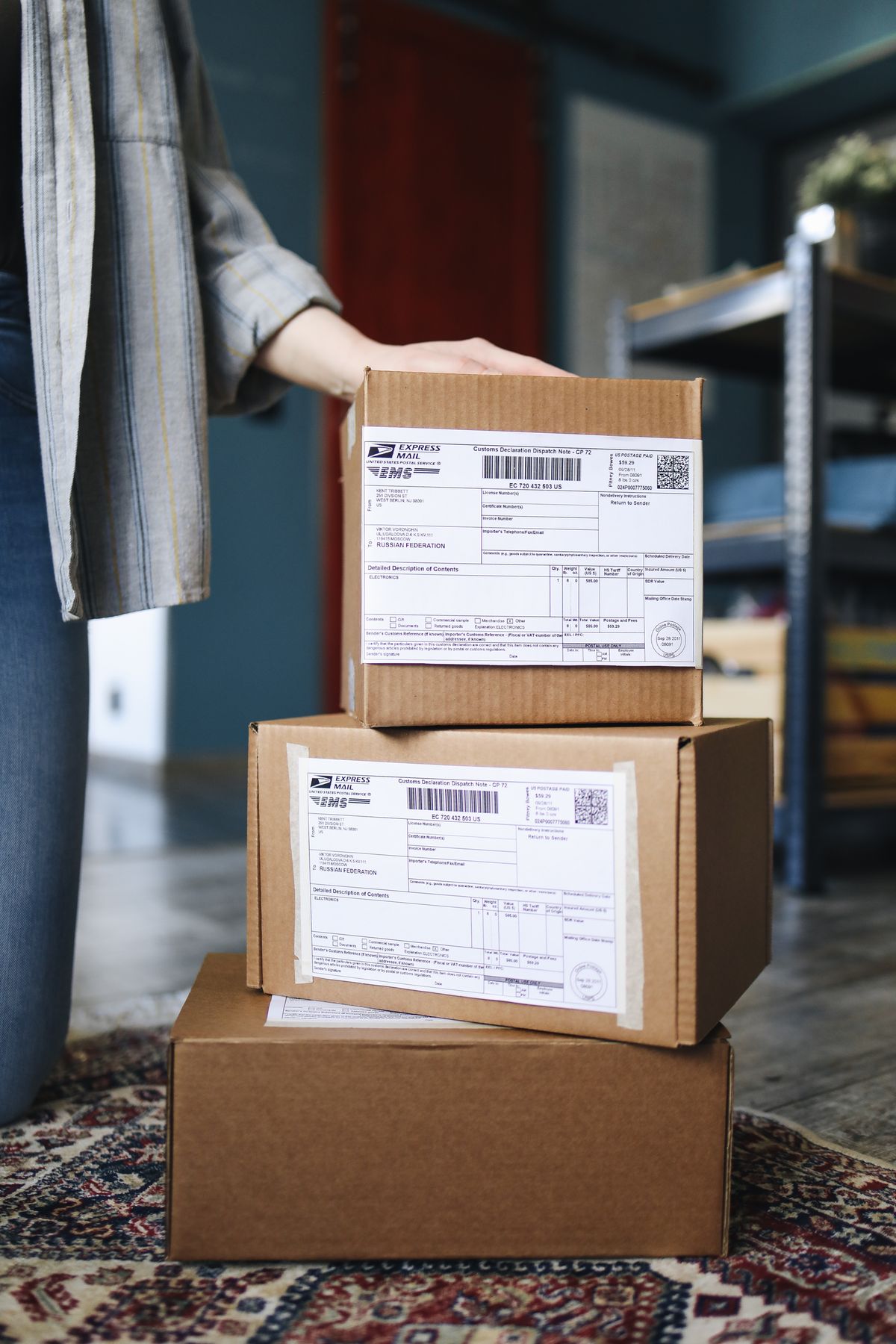 Home goods corrugated cases stacked and ready for sea freight export to UK and US buyers.
Frequently Asked Questions
What board grade do I need for ceramic mugs sourced from India?
For individual ceramic mugs packed with cell dividers, 150/120/150 GSM (420 total, ECT 32) is the standard starting specification for retail cases of 6 to 12 pieces. If your mugs are heavier than average (above 350g each) or you are packing more than 12 per case, move to 180/150/180 (ECT 40). Always include corrugated cell dividers - the board grade alone does not provide impact protection between individual pieces.
Can I use single wall corrugated for heavy stoneware?
For very heavy stoneware (cast iron casseroles, heavy stone mortar sets), single wall is borderline at best. At total case weights above 10 kg, specify 5-ply double wall (BCT 48 or higher). Sea freight container loads stack boxes 5 to 6 high on pallets, and a 10 kg case at the bottom of a stack carries significant compressive load over a 4-week voyage.
Do Indian manufacturers include cell dividers in the corrugated box price?
Cell dividers are quoted separately from the outer carton. Expect to specify the divider configuration (number of cells, orientation) and the divider board grade. At volumes above 5,000 units, corrugated dividers are very cost-effective - typically a small fraction of the total box cost. Some manufacturers prefer to quote the full shipping unit (outer carton plus dividers) as a single SKU.
What FSC certification should I ask for?
Ask for FSC chain-of-custody (FSC CoC) certification. This allows the manufacturer to provide FSC-certified board and issue FSC claim documentation with your shipment. FSC-certified board from India uses imported certified liner with domestically sourced recycled medium. The FSC label on the finished box confirms chain of custody from the certified forest to your retail packaging.
Can I get custom printed home goods packaging from India with a low MOQ?
Whizzpack's MOQ for corrugated boxes (including custom printed) is 5,000 units. At that volume, custom printing is cost-effective for most home goods brands. For lower volumes, unprinted boxes with applied sticker labels are an alternative that keeps tooling costs minimal while maintaining a clean, professional appearance.
Sourcing Home Goods Corrugated Boxes from India
India manufactures corrugated boxes for home goods export to international quality standards, with good availability of FSC-certified board, cell dividers, layer pads, and custom printing options. Factory-direct supply from India typically offers 30 to 50% cost savings versus domestic UK or US purchasing, even after sea freight costs.
Whizzpack manufactures corrugated boxes for home goods, housewares, and fragile product categories at our factory in Rajkot, Gujarat. We produce in all board grades from light 3-ply to heavy 7-ply triple wall, with cell dividers, layer pads, and multi-colour flexographic printing available from 5,000 units. We export factory-direct to importers across the USA, UK, and Europe.
For detailed specification guides by box type, see our pages on RSC corrugated boxes, double wall corrugated boxes, and custom printed corrugated boxes. To discuss your home goods packaging specification or request a sample, contact us at contact@whizzpack.in or visit our corrugated boxes page.