UK seed companies that have never imported directly from India often assume the process is complicated. In practice, importing cotton bags for seeds from an Indian manufacturer is a routine commercial import with well-established procedures. The key is understanding the commodity code, the preferential duty rate available under the UK's Developing Countries Trading Scheme, and what documentation your supplier needs to provide.
This guide is written for UK seed brands, garden retailers, and agricultural buyers who are sourcing or considering sourcing cotton bags for seeds directly from India. It covers the UK commodity code, current duty position, EORI registration, supplier documentation, and the UK customs clearance process.
UK Commodity Code for Cotton Bags
Every imported product is classified under a UK commodity code (the UK equivalent of the Harmonised System code). The code determines the applicable import duty rate and any specific import controls.
Cotton bags used for packaging goods are classified under:
UK commodity code: 6305 20 00 Description: Sacks and bags, of a kind used for the packing of goods - of cotton
This code covers cotton drawstring bags, cotton flat sacks, and cotton packaging bags of all sizes used for storing or packaging goods. It applies to both plain and printed cotton bags.
When your supplier in India prepares export documents, they will classify the goods under the equivalent Indian HS code (which is harmonised at the 6-digit level globally). Verify that the classification is consistent between the export invoice and your UK import declaration.
If you are importing cotton bags combined with other packaging materials in the same container, each product type requires its own commodity code line on the customs declaration.
UK Import Duty and the Developing Countries Trading Scheme (DCTS)
Under the UK Global Tariff, the standard (MFN) duty rate for cotton bags classified under 6305 20 00 is approximately 9.6%. However, India qualifies for preferential tariff treatment under the UK's Developing Countries Trading Scheme (DCTS), which replaced the UK's Generalised Scheme of Preferences after Brexit.
Under the DCTS Enhanced Preferences framework, which India benefits from, the duty rate for most textile goods including cotton bags is significantly reduced compared to the MFN rate. For many textile categories, DCTS brings the rate to 0%.
How to access the DCTS preferential rate:
Your supplier in India must provide a certificate of origin confirming the goods qualify under DCTS. The standard origin document for UK DCTS is a GSP certificate of origin (Form A) or, for shipments from established exporters, a Registered Exporter (REX) statement of origin on the commercial invoice.
Your customs broker will enter the DCTS preference code on the import declaration to claim the preferential rate. Without the correct origin document from your supplier, you will be charged the full MFN duty rate.
Practical note: Duty rates and DCTS coverage are subject to change. Always verify the current applicable rate using the UK Government's Trade Tariff tool at trade-tariff.service.gov.uk before placing an order, and confirm the DCTS status with your customs broker at the time of import.

EORI Number: Your UK Import Identity
Before you can import goods into the UK commercially, you need an EORI (Economic Operators Registration and Identification) number. This is a unique identifier for businesses engaged in import or export activity with the UK.
How to register: Apply for a UK EORI number through the HMRC website. Registration is free and typically takes 3 to 5 business days. You will need your VAT registration number (if VAT registered) or your company registration number.
Your EORI number is required on all UK customs declarations. It links the import to your business for VAT and duty accounting purposes.
If you are importing goods to Northern Ireland, the rules are different - Northern Ireland remains subject to EU customs procedures for goods entering from non-EU countries. Speak to your customs broker about the specific requirements.
Documents Your Indian Supplier Must Provide
The documentation package for a standard commercial import from India should include:
Commercial invoice A detailed invoice showing: seller and buyer details, full description of the goods, UK commodity code, quantity, unit weight, total gross and net weight, total value (in the agreed trade currency), and the trade terms (Incoterms - FOB, CIF, or similar).
Packing list Itemised list of what is in each carton or pallet: dimensions, gross weight, net weight, and the content of each package. Must match the commercial invoice in total quantities.
Bill of lading (sea freight) or air waybill Issued by the shipping line or air freight carrier. Confirms the goods were received for shipment and is a title document for the cargo.
Certificate of origin (Form A or REX statement) Required to claim DCTS preferential duty. Form A is issued by the Indian Export Promotion Council or Chamber of Commerce; a REX statement is a self-declaration by an Indian exporter registered in the REX system. Your supplier should know which they hold.
Packing declaration / composition certificate Confirms the fibre content of the bags (100% cotton) and any finishing treatments. Required if you are making claims about certification (OEKO-TEX, GOTS) at customs.
GOTS or OEKO-TEX certificate copy If you are importing certified bags, bring a copy of the relevant certification and the transaction certificate (for GOTS) as supporting documentation.
The UK Customs Clearance Process
UK customs clearance is managed through the UK Customs Declaration Service (CDS), which replaced the older CHIEF system in 2023. In practice, your customs broker handles all CDS submissions on your behalf.
The process, step by step:
Your supplier ships the goods and sends you the complete document set (invoice, packing list, bill of lading, certificate of origin).
You appoint a licensed customs broker (also called a freight forwarder with customs clearance capability) to represent you at UK customs. Most freight forwarders offer customs clearance as part of their service. Expect to brief them with the document set above.
Your broker submits an import declaration to CDS, classifying the goods under the correct commodity code, declaring the customs value, and claiming the DCTS preferential duty rate if applicable.
Customs either accepts the declaration immediately (most routine commercial imports clear without examination) or selects the goods for documentary examination or physical inspection. Physical examinations are relatively uncommon for straightforward textile imports with complete documentation.
Duty and import VAT are charged to your duty deferment account (if you have one) or paid immediately before the goods are released. Import VAT (currently 20%) is applied to the customs value plus duty. If you are VAT registered, import VAT is recoverable on your next VAT return.
Goods are released to your nominated inland delivery address or to a bonded warehouse if you prefer deferred storage.
UK Ports for India Freight
The main UK ports for sea freight from India are:
Felixstowe - The UK's largest container port, handling the majority of India-UK container freight. Most major shipping lines serving India (Maersk, MSC, CMA CGM, Hapag-Lloyd) have Felixstowe as their primary UK port of call.
Southampton - The second major container port in the south of England, with strong India freight connections, particularly via transhipment through European hubs.
London Gateway - A modern deep-water port in the Thames Estuary that has grown as an alternative to Felixstowe, particularly for goods destined for the London and South East market.
Sea freight transit time from Mundra (Gujarat) or JNPT (Mumbai) to Felixstowe is typically 22 to 28 days, varying by service and any transhipment routing via Colombo, Salalah, or European hubs.
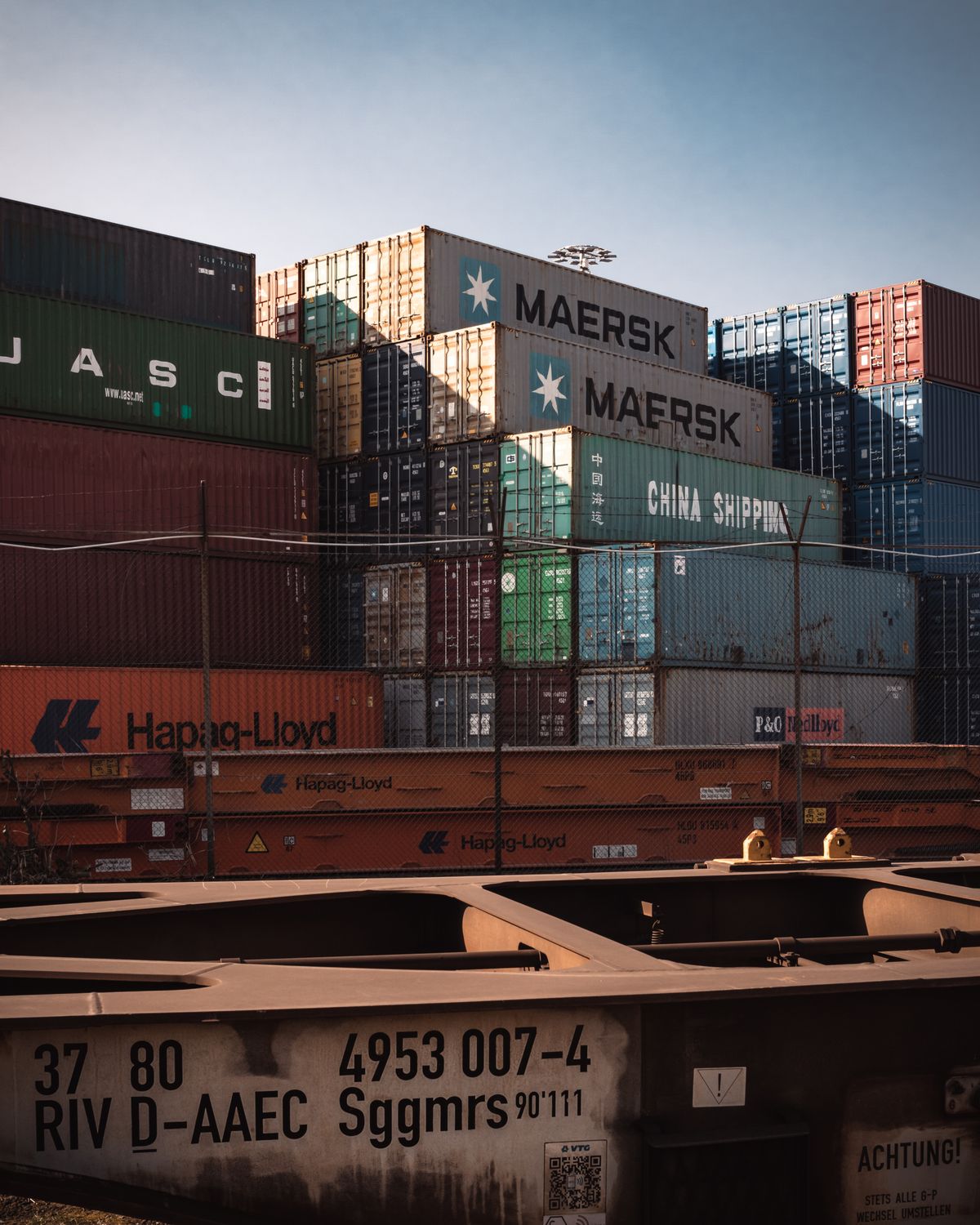 Container freight from India travels via established shipping lines on well-serviced routes to Felixstowe, Southampton and London Gateway. Booking through a freight forwarder with India experience gives access to negotiated rates and routing expertise.
Air Freight for Samples and Urgent Orders
Sea freight is the standard and most cost-effective method for bulk orders. For samples, pilot orders, or urgent seasonal restocks, air freight from India to the UK is available at significantly higher cost per kilogram.
Air freight transit time from India to Heathrow is 2 to 4 days (door-to-door including UK customs clearance, typically 5 to 7 business days).
Air freight through a Heathrow cargo handler clears under the same UK customs process as sea freight. Your customs broker handles the CDS declaration in the same way, using the air waybill instead of a bill of lading.
Import VAT and VAT Recovery
Import VAT at the current standard rate (20%) applies to the customs value of the goods plus any import duty paid. This is payable at the time of customs clearance.
If your business is VAT registered in the UK, import VAT is fully recoverable as input tax on your next VAT return. This means the effective cost is neutral for VAT-registered businesses.
If you are not VAT registered, import VAT is a real cost. Factor this into your landed cost calculation when comparing the economics of importing directly versus buying through a UK distributor.
Do You Need a Customs Broker?
For container imports, yes - a licensed customs broker is strongly recommended and, in practice, essential. Customs declaration preparation for UK CDS requires specialist knowledge of UK tariff classification, customs value rules, origin documentation requirements, and CDS technical procedures.
Most freight forwarders offer customs clearance as part of their service. Alternatively, standalone customs brokers operate at all UK ports. Ask any customs broker you are considering for their experience with India textile imports specifically.
Broker costs are typically a few hundred pounds per declaration - a small fraction of the order value and well worth the compliance assurance, particularly on a first import.
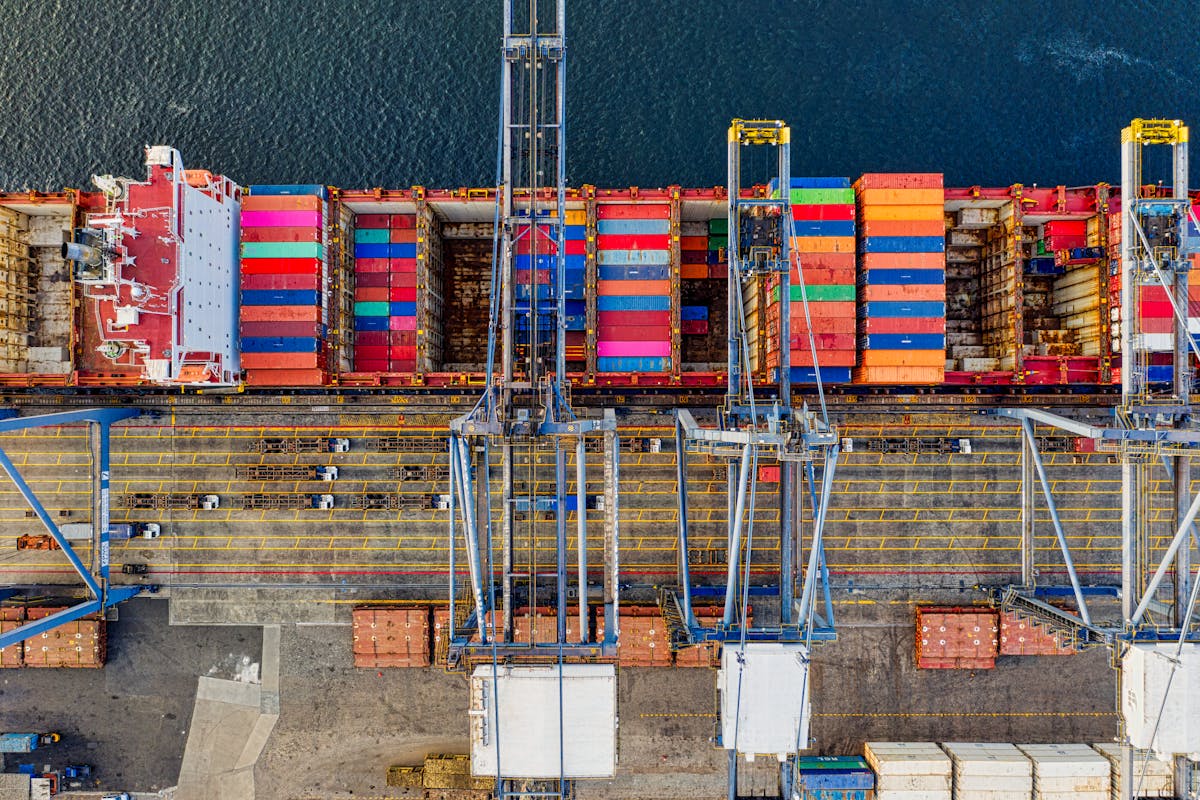 Container loading at Gujarat's ports connects Indian manufacturers directly to UK buyers. Mundra Port, operated by Adani Ports, is one of India's largest container terminals and handles significant volumes of textile and packaging exports to the UK.
Checklist: What to Confirm Before Your First UK Import
- UK EORI number registered with HMRC
- UK commodity code confirmed for your specific product (6305 20 00 for cotton bags)
- Current DCTS duty rate verified on the UK Trade Tariff tool
- Customs broker appointed with India textile import experience
- Supplier confirmed to provide: commercial invoice, packing list, bill of lading, Form A or REX statement of origin, and any certification documents
- Sea freight transit time factored into your delivery planning (22 to 28 days from Gujarat ports to Felixstowe)
- Import VAT recovery position confirmed with your accountant
For the complete process of sourcing cotton bags from India, including factory vetting, sample ordering, and production lead times, see our full sourcing guide for UK importers.
Whizzpack exports Cotton Bags for Seeds directly to UK importers from our factory in Rajkot, Gujarat. We provide the complete documentation set required for UK customs clearance, including OEKO-TEX and GOTS certificates, Form A certificates of origin, and pre-shipment inspection support. To discuss an import inquiry, contact us at contact@whizzpack.in or visit our cotton bags for seeds page.