
Custom printed cotton seed bags from India are the standard packaging choice for seed companies, garden retailers, and organic farm brands that want a retail-ready, branded product. This guide covers minimum order quantities by print method, what artwork to send the factory, how colour matching works on cotton fabric, how sampling protects your production run, and what to specify for UK garden retail or US seed brand programmes.
Print Methods Available from Indian Manufacturers
India produces custom printed cotton bags using four main print methods. The right choice depends on your design complexity, colour count, volume, and required finish.
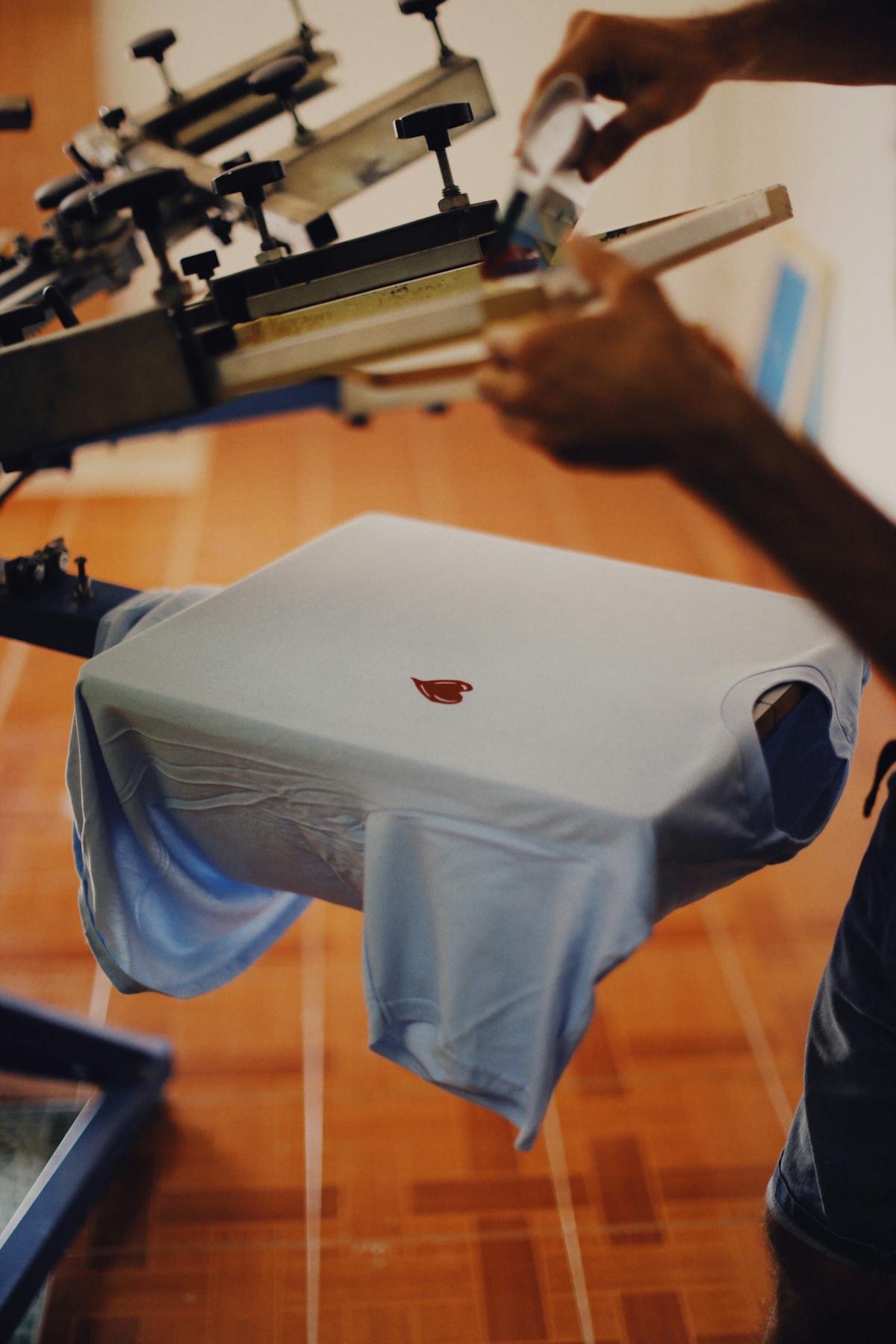
Screen Printing
Screen printing is the standard method for cotton seed bags at wholesale quantities. Each colour in the design requires a separate screen (printing plate). Ink is pushed through the screen onto the fabric using a squeegee.
Best for: Logo-forward designs with defined areas of solid colour. One to four Pantone colours. Designs without photographic gradients or fine halftone detail.
Advantages: Strong colour opacity on natural or coloured fabric, durable (ink bonds to fabric fibres), cost-effective at 500 units and above.
Limitations: Not suitable for full-colour photographic images or complex gradients. Each colour is a separate production step.
MOQ for screen printing:
| Colours | Minimum per Design |
|---|---|
| 1 colour | 500 to 1,000 units |
| 2 colours | 1,000 to 1,500 units |
| 3 colours | 1,500 to 2,000 units |
| 4 colours | 2,000 units |
Heat Transfer (Sublimation)
Sublimation printing transfers a photographic-quality, full-colour image onto the fabric via heat and pressure. It works best on white or very light fabric and produces vivid, detailed imagery including gradients, photography, and botanical illustrations.
Best for: Premium retail seed bags featuring full-colour botanical artwork, seed photography, or detailed illustrative designs.
MOQ: 500 to 1,000 units per design.
Note: Sublimation requires a polyester or polyester-cotton blend fabric for best results. On 100% natural cotton, the colour gamut is narrower. If full-colour reproduction on natural cotton is important, discuss this with the factory at the specification stage.
Digital Printing (Direct-to-Garment)
Direct-to-garment (DTG) digital printing applies ink directly onto the fabric surface using inkjet technology. It handles any colour complexity without additional screen setup cost per colour.
Best for: Low-volume runs (under 500 units) and multi-SKU programmes where each variety has a different design. Avoids minimum print run requirements per design.
Limitations: Higher per-unit cost than screen printing above 500 units. Colour vibrancy on natural (undyed) cotton is good but typically not as saturated as screen printing.
Embroidery
For premium branded cotton bags where a tactile, high-quality finish is required. Embroidery works well for brand logos and monograms on heavier fabric (150 GSM and above).
Best for: Premium gift bags, branded merchandise, or upscale seed packaging where the embroidered logo is a quality signal.
MOQ: 500 units. Requires a digitised embroidery file (not a standard vector file - your factory can digitise from your artwork at a one-time setup cost).
Artwork Requirements
To produce a print-ready sample, provide your factory with:
For screen printing:
- Vector artwork file (.AI, .EPS, or .PDF with fonts outlined)
- Separate colour layers (one layer per Pantone colour)
- Pantone (PMS) colour references for each colour
- Print area dimensions (width x height in cm or mm, and position on the bag)
For sublimation or digital:
- High-resolution image file (.TIFF or .PNG, minimum 300 DPI at print size)
- Colour profile: sRGB or CMYK
- Background: specify whether the bag fabric shows through (transparent background) or there is a solid background printed behind the image
Artwork format tip: Designs created for paper printing may need adjustment for fabric. Cotton fabric has a slightly textured surface that diffuses very fine detail. Lines under 1mm wide and type under 8pt may not reproduce cleanly. Ask the factory to flag any elements that may cause registration or reproduction issues before proceeding to sample.
Colour Matching on Cotton Fabric
Cotton fabric absorbs ink differently from paper or plastic. Pantone references specified for paper printing will appear differently on natural cotton because the fabric's natural colour (off-white or cream) influences the perceived colour. Bleached white cotton gives more predictable colour matching.
For accurate colour:
- Specify Pantone textile references (TCX - Textile Cotton Extended) rather than paper references (C for coated, U for uncoated) when ordering screen-printed cotton bags. TCX references are calibrated for fabric substrates.
- Request a printed lab dip or press proof on your actual fabric before approving production.
- Provide a physical reference sample (a printed piece showing your target colour) alongside the Pantone reference. Physical references resolve ambiguity that numerical references alone can create across different production facilities.
Batch-to-batch consistency: On repeat orders, approve a new press proof before each production run if colour accuracy is critical. Cotton lots and ink batches vary slightly between runs. A press proof approval step adds 3 to 5 days but ensures you receive the colour you approved.
How Sampling Works Before Production
No buyer should approve a production run of custom printed cotton seed bags from photos or digital renders alone. Cotton fabric absorbs ink differently from screens, and the only reliable approval is a physical sample.
Standard sample process:
- Provide complete specification: bag dimensions, fabric weight (GSM), drawstring type, print design and colours.
- Factory produces 3 to 5 sample bags using your print design on your specified fabric.
- Samples are shipped to you by air freight (typically 2 to 4 days to US or UK).
- Review the sample against your design intent. Provide specific, measured feedback (see below).
- Factory corrects and resends if required, or receives written production approval.
What to check on the sample:
- Bag dimensions (measure internal dimensions with a ruler)
- Fabric weight and weave (compare against your specification)
- Drawstring material (should be cotton cord, not nylon)
- Stitch quality (consistent seam width, no loose threads)
- Print registration (artwork positioned correctly and consistently on all samples)
- Colour accuracy (compare against your Pantone TCX reference or physical reference)
- Print durability (rub firmly with a damp cloth - colour should not transfer significantly)
Feedback format: "Pantone 3395 TCX green is printing approximately 20% lighter than reference. Please increase ink density and resend." Specific, measurable feedback produces a faster and more accurate correction than general observations.
Managing Multi-SKU Seed Company Programmes
Seed companies with 20 to 200 seed variety SKUs cannot realistically run a separate print production for each variety. The most cost-effective approach:
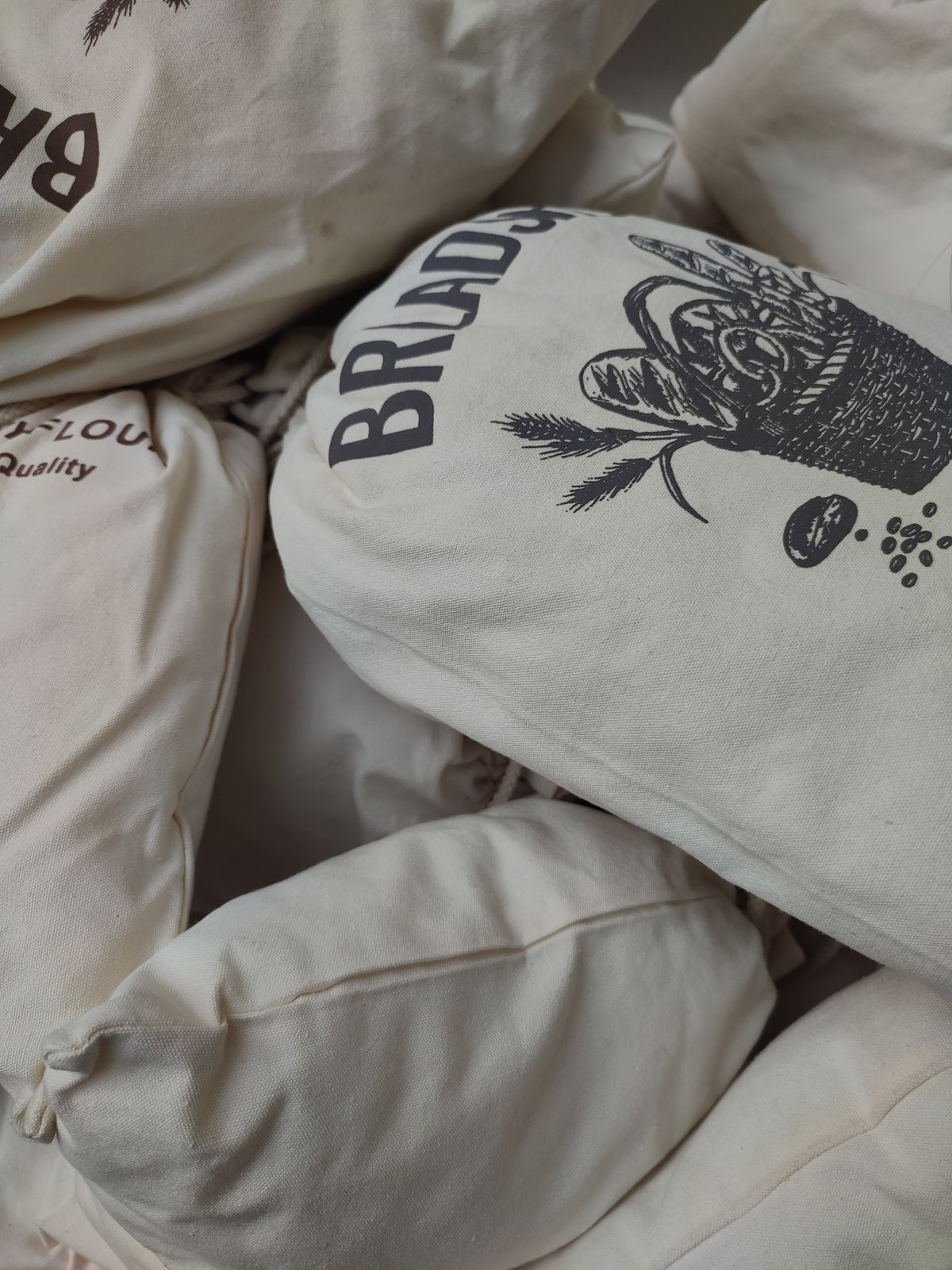
Base print + overprint: Run a common design (brand logo, background colours, fixed decorative elements) on all bags in one production run. Then apply a variety-specific overprint (variety name, planting information, unique element) as a second print pass at lower volume per SKU. This approach reduces the effective MOQ per variety while maintaining brand consistency.
Unprinted bags with labels: Order unprinted or base-printed bags in large volumes. Apply variety-specific label stickers or hangtags in your warehouse. This gives maximum flexibility for SKU management at the cost of an extra assembly step.
Woven or sewn-on labels: For premium seed ranges where a sewn-on label rather than a sticker is consistent with the brand positioning. The factory sews a woven label onto each bag. Labels are produced separately (typically by a label manufacturer in the same region) and supplied to the bag factory for sewing.
Whizzpack produces custom screen-printed cotton seed bags at our factory in Rajkot, Gujarat, with OEKO-TEX Standard 100 certified fabric available. We supply UK garden retailers and US seed companies with 1 to 4 colour screen printing, natural cotton drawstring closures, and physical sample approval before any production run. MOQ from 5,000 units per design.
Visit our cotton bags for seeds page or our custom printed cotton bags page to discuss your print specification and request samples. Contact us at contact@whizzpack.in with your bag dimensions, design brief, and target quantity.
For the full wholesale sourcing process, see our cotton bags for seeds sourcing guide for US and UK importers.