US brands buying corrugated boxes in volume have three main sourcing options: domestic purchase, import from China, or import from India. For orders above 10,000 units per run, factory-direct from India consistently delivers the best combination of unit cost, quality documentation, and supply chain resilience. This guide explains what bulk sourcing from an Indian corrugated box manufacturer actually involves.
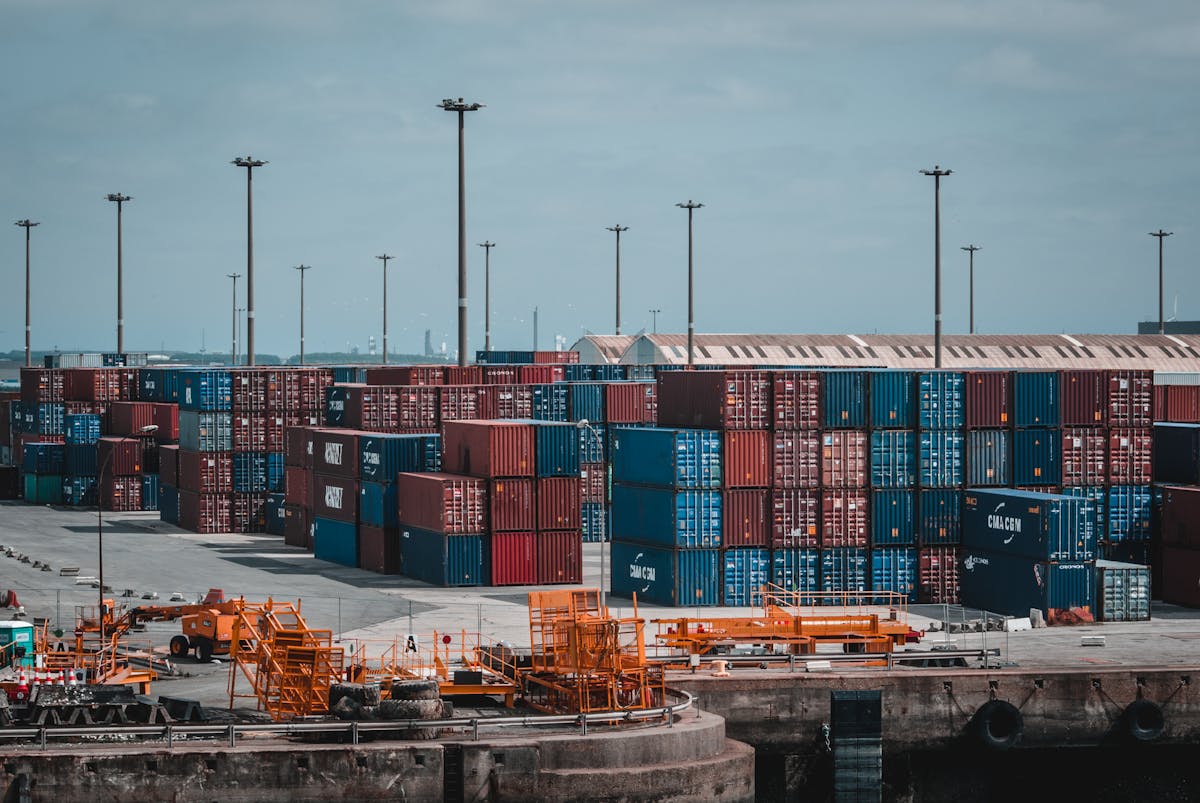 Bulk corrugated box orders from India are typically fulfilled on FCL or partial FCL basis, shipped by sea to US East or West Coast ports.
Why US Brands Source Bulk Corrugated Boxes from India
The primary driver is cost. Indian corrugated box manufacturers operate with significantly lower input costs than US domestic producers - raw paper, labour, and energy costs are all lower, and factory overheads reflect a market where corrugated manufacturing is a major export industry.
For a US brand buying corrugated boxes domestically, the cost difference on a like-for-like specification can be substantial when you factor in the full cost per unit landed at your warehouse. Sea freight from India to US East Coast ports is well-established, with reliable transit times of 22 to 28 days on major carrier routes.
The secondary driver is customisation. Indian factories are accustomed to building boxes to exact buyer specifications - custom dimensions, custom board grades, custom print. There are no "standard size" premiums for unusual dimensions. Every order at an Indian corrugated factory is a custom production run, which means the box is built to your product, not approximated from stock.
The third driver, increasingly relevant, is supply chain diversification. Brands that source exclusively from China have learned the risks of single-country dependency. India offers comparable manufacturing capability with a different risk profile, different trade agreements, and a different currency exposure.
What "Bulk" Means in the Indian Export Context
Indian corrugated manufacturers typically work to a minimum order quantity of 5,000 units. Below that, some will produce for sampling but not for commercial supply. Bulk orders that fill or partially fill a container are where the unit economics become most favourable.
LCL (Less than Container Load): Orders of roughly 5,000 to 15,000 units for standard-sized boxes typically move as LCL cargo, consolidated with other exporters' freight at the origin port. LCL adds a consolidation charge but is perfectly practical for regular orders.
FCL (Full Container Load): A standard 20-foot container can hold between 15,000 and 40,000 corrugated boxes depending on dimensions and whether boxes are shipped flat or pre-erected. A 40-foot container roughly doubles that capacity. FCL is more cost-efficient per cubic metre and is the target for most established bulk buyers.
Container optimisation: Indian manufacturers experienced in export will help you calculate how many boxes fit per container and may suggest minor dimension adjustments that increase the count and reduce your per-unit freight cost without affecting box performance.
Quality at Bulk Volumes
The concern about quality consistency at scale is reasonable. Here is what a professional Indian corrugated box manufacturer should provide on a bulk order:
Burst strength certificates: Each batch is tested to ASTM or IS standards and a burst test certificate is issued. The certificate confirms the board meets the specified burst factor, which is the minimum quality gate for most US retailer vendor compliance programmes.
GSM verification: The liner and medium paper grades are confirmed by weighing and testing against the specification. If you ordered 150 GSM kraftliner / C flute and the factory substitutes a lighter grade, the burst strength will fail - which is why independent test documentation matters.
Pre-shipment inspection: Third-party inspection by SGS, Bureau Veritas, or Intertek can be arranged before loading. The inspector checks dimensions, board specification, print quality, and random sample burst testing against your purchase order specification. This is standard practice for established US importers and is worth the inspection fee.
Sample approval before production: A professional supplier will produce samples in your exact specification before the production run, get written approval from you, and then produce to the approved sample. This is the single most important step in quality assurance for bulk orders. Do not release production without signed sample approval.
Lead Times for Bulk Orders from India
 Sea freight from India to US East Coast ports takes 22 to 28 days. Planning bulk orders 8 to 10 weeks ahead of your required warehouse delivery date is standard practice.
For planning purposes, a bulk corrugated box order from India follows this timeline:
- Sample production: 5 to 7 working days, air-shipped to you for approval
- Sample approval to production start: 1 to 3 days (your sign-off time)
- Production lead time: 15 to 20 working days for most standard specifications
- Export documentation and cargo ready: 3 to 5 days after production completion
- Sea freight transit to US East Coast: 22 to 28 days
- Port clearance and delivery: 3 to 7 days depending on customs clearance
Total time from placing an order to goods in your US warehouse: typically 8 to 10 weeks for a first order including sample approval. Repeat orders where the sample is already approved can be planned on a 7 to 8 week cycle from purchase order to delivery.
Build this lead time into your inventory planning. Brands that run too close to zero stock before reordering often pay premium for domestic emergency supply, which eliminates the cost advantage of their India sourcing.
Checking a Bulk Supplier's Credentials
Before placing a significant bulk order with an Indian corrugated box manufacturer, verify the following:
Export experience to the US: Ask for references from current US customers. An experienced exporter will have completed multiple FCL and LCL shipments to US ports and will understand the documentation requirements including commercial invoice, packing list, bill of lading, and any applicable certifications.
In-house board manufacturing vs. trading: Some suppliers purchase board from a third party and cut and print boxes. Others manufacture the board in-house. In-house board manufacturing gives the supplier more control over input quality and lead times. Ask where the kraft liner and medium come from.
Quality documentation as standard: Burst strength certificates, GSM certificates, and inspection reports should be standard, not optional extras. If a supplier treats these as unusual requests, that tells you something about their export experience.
Payment terms: Standard for Indian exporters is 30% advance with purchase order, 70% against bill of lading copy. Suppliers asking for 100% upfront on a first large order are not following market norms. Suppliers offering extended credit to a new customer are also unusual. Standard terms protect both sides.
Container Load Calculations: A Practical Planning Tool
One of the practical advantages of working with an experienced Indian exporter is container optimisation - getting the maximum number of boxes into a container to minimise your per-unit freight cost. Here is how the calculations work in practice.
A standard 20-foot container (20GP) has approximately 33 cubic metres of usable volume. A standard 40-foot container (40GP) has approximately 67 cubic metres. The number of corrugated boxes that fit depends on box dimensions and whether they ship flat (knocked down flat, or KDF) or pre-erected.
Example: Standard e-commerce shipping box, 400mm x 300mm x 200mm
- Flat (KDF): approximately 32,000 to 38,000 units in a 40-foot container
- Pre-erected: approximately 7,000 to 9,000 units in a 40-foot container
Example: Larger outer carton, 600mm x 400mm x 400mm
- Flat (KDF): approximately 11,000 to 14,000 units in a 40-foot container
- Pre-erected: approximately 2,000 to 2,800 units in a 40-foot container
Most bulk import orders ship flat to maximise container utilisation. Pre-erected shipments are only relevant for very small orders or unusual circumstances. An experienced Indian manufacturer will provide a container loading plan with every FCL order confirmation, showing the stack arrangement and unit count - this also serves as the packing list basis.
For LCL shipments, your freight forwarder charges by cubic metre. Knowing the flat dimensions of your boxes and the quantity lets you calculate the CBM and estimate freight cost before committing to an order. Manufacturers experienced in US export will produce this calculation as part of the quote.
The Gujarat Manufacturing Cluster Advantage
Most of India's corrugated box export capacity that ships to the US and UK is based in Gujarat, with Rajkot, Ahmedabad, Vadodara, and Surat as the main manufacturing centres. This geographic concentration creates specific supply chain advantages for buyers sourcing bulk volumes.
Port proximity: Gujarat manufacturers are 2 to 6 hours by road from Mundra Port and Kandla Port, both of which have direct container services to US East Coast and West Coast ports and to UK and North Europe ports. Shorter port transit reduces inland freight cost and the window for cargo damage between factory and vessel loading.
Integrated raw material supply: The Gujarat paper and board industry supplies the kraft liner and fluting medium that go into corrugated board locally. This reduces the supply chain for your box - the manufacturer is not waiting on board imports from overseas. It also means more control over board quality, since the manufacturer is not dependent on a single external paper supplier.
English-language business environment: Rajkot and Ahmedabad have a long history of export-oriented manufacturing - textiles, engineering, chemicals, and packaging. The business community is accustomed to dealing with US and UK buyers, and English is standard for commercial correspondence. Specification errors from communication gaps are less common than in markets where English is a secondary working language.
Cluster depth: Multiple manufacturers in the same geography means that if your primary supplier has capacity constraints, alternatives are accessible without a complete supply chain rebuild. For buyers who grow their India sourcing programme over time, this provides resilience.
Repeat Order Economics
The unit economics of bulk corrugated box sourcing from India improve substantially after the first order. Understanding this shapes how you should think about your initial order and your long-term supplier relationship.
One-time costs that do not recur: Die-cutting tooling, printing plate production, sample costs, and supplier setup documentation are one-time costs that amortise across the lifetime of a specification. A buyer who repeats the same specification four times a year distributes these costs across four orders rather than concentrating them in the first.
Faster lead times on established specifications: Once a specification is confirmed and a supplier relationship is established, sample approval is no longer needed for repeat orders. The production-to-delivery cycle compresses from 8 to 10 weeks to 7 to 8 weeks, and can tighten further as the buyer's ordering pattern becomes predictable to the manufacturer.
Volume-based pricing: Indian manufacturers will negotiate lower unit prices at higher annual committed volumes. A buyer who shares a volume forecast for the year - even informally - typically receives better pricing than a buyer who places the same total volume as unconnected spot orders. This is standard in B2B manufacturing globally and applies as much in India as anywhere.
Production scheduling priority: Suppliers prioritise repeat buyers with predictable order cycles. A buyer who has placed four orders over the past twelve months has more leverage on production scheduling than a first-time buyer requesting an urgent turnaround. Building the relationship through consistent ordering pays dividends over time.
Frequently Asked Questions
What is the minimum order quantity for a bulk corrugated box import from India? Most Indian manufacturers have a minimum order quantity of 5,000 units. Below that, the economics of a custom production run, tooling, and sea freight generally do not produce competitive landed unit costs. The strongest unit economics start at around 10,000 units and above, and FCL economics become relevant at roughly 15,000 to 20,000 standard-sized boxes depending on dimensions.
How do I verify that the boxes received match the specification I approved? The standard approach is pre-shipment inspection combined with test documentation. Third-party inspection agencies such as SGS, Bureau Veritas, and Intertek can inspect goods at the Indian factory before loading, checking dimensions, board grade, print quality, and burst strength against your purchase order. Requesting burst strength and GSM certificates with every production batch is standard practice for established importers.
Can I source multiple box sizes in a single shipment? Yes. A single shipment can include multiple box specifications provided each meets the minimum production quantity and the combined volume works for the container economics. Your manufacturer will confirm feasibility and advise on any lead time implications of running multiple specifications simultaneously.
What happens if boxes arrive damaged or out of specification? The resolution process depends on the purchase order terms and whether pre-shipment inspection was conducted. With proper documentation - a pre-shipment inspection report, a signed sample approval, and test certificates - you have clear evidence of what was agreed and what was delivered. Disputes are uncommon when both sides have documented the specification throughout the process.
How should I structure a first order to reduce risk while testing a supplier? Most experienced importers start with a smaller-than-target order - enough to fill one LCL shipment or a partial container - at a single box specification. This confirms the supplier's production quality and logistics execution before committing to FCL volumes or multiple specifications. The per-unit cost on the first order will be higher than on a subsequent FCL order, but the validation is worth the premium.
Consolidating Orders: Corrugated Boxes and Other Packaging
One practical benefit of factory-direct India sourcing is the ability to consolidate different packaging products in a single shipment. If your brand uses corrugated boxes for outer shipping cartons and cotton bags for seeds or other fabric packaging for retail units, sourcing both from the same Indian facility reduces freight complexity and allows you to reach container-fill thresholds faster.
Whizzpack manufactures both corrugated boxes and cotton bags for seeds at our factory in Rajkot, Gujarat. Consolidated orders can be discussed at the enquiry stage and may allow you to achieve FCL economics on a combined product mix that would be LCL for either product alone.
Getting Started with a Bulk Order from Whizzpack
Whizzpack is a factory-direct corrugated box manufacturer in Rajkot, Gujarat, exporting bulk orders to US brands, Amazon sellers, retailers, and distributors. We produce B, C, E, and BC double wall corrugated boxes in custom sizes and board grades, with flexographic printing available from single-colour to four-colour.
For bulk enquiries, visit our corrugated boxes page or contact us at contact@whizzpack.in with:
- Box dimensions (internal L x W x H)
- Required board specification or product details
- Annual volume estimate or order frequency
- Destination port and Incoterms preference
We respond within 24 hours with a quotation, sample timeline, and container count estimate. For buyers earlier in the evaluation process, our guide on what to prepare before requesting a corrugated box quote walks through the specification inputs that produce accurate quotes.